Manufacturing in 2026 no longer runs on static forecasts and monthly planning meetings. Markets shift overnight. Raw material prices fluctuate without warning. Customer orders spike because of viral demand or geopolitical shifts.
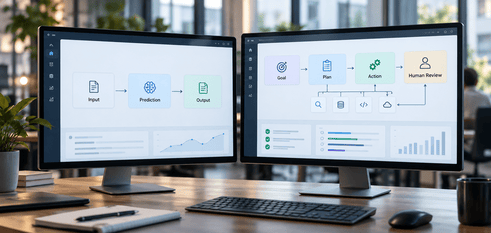
For years, manufacturers invested in predictive analytics. The goal was simple: forecast demand better than last quarter. But today, predictive is not enough. The real shift is toward adaptive operations.
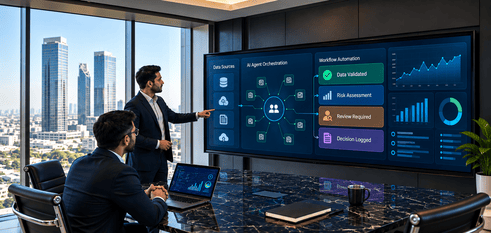
Now imagine a factory that does not just predict the future but continuously adapts to it. That is the promise of ai-driven capacity planning in manufacturing. It moves planning from static spreadsheets and ERP modules to intelligent systems that think, simulate, and act in real time.
Instead of asking, “How much can we produce next month?” manufacturers begin asking, “How do we adjust in the next hour?”
The Shift to AI-Driven Capacity Planning
Redefining Resource Utilization
In traditional setups, resource utilization is reviewed after the fact. Managers analyze machine uptime, labor availability, and order backlogs. Adjustments follow in the next planning cycle.
With AI-driven models, resource utilization becomes dynamic. The system continuously evaluates:
- Machine load and performance
- Workforce availability and skill sets
- Material constraints
- Order priority
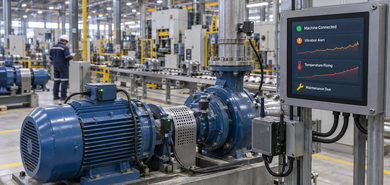
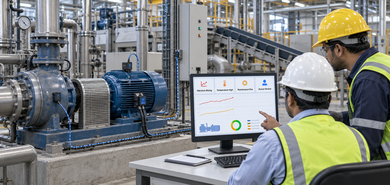
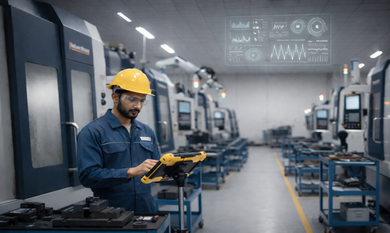
If a CNC machine slows down due to minor calibration drift, the AI reallocates production loads before throughput drops significantly. If absenteeism affects a shift, schedules adjust automatically.
Think of it like a GPS system. Traditional ERP planning gives you a printed map. AI-driven planning behaves like live navigation, recalculating routes when traffic appears.
Boosting Throughput Efficiency
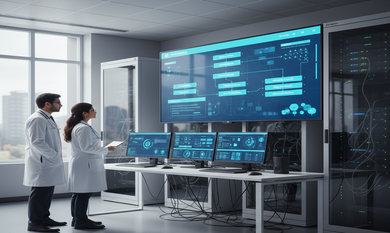
Throughput efficiency depends on synchronization. In 2026, factories increasingly use Digital Twin Synchronization, where a virtual replica of the plant mirrors real-world performance.
When integrated with AI-driven capacity planning in manufacturing, this digital twin simulates production changes before they are implemented. It answers questions like:
- What happens if we increase output by 15 percent?
- Where will the bottleneck form?
- Can we absorb an urgent export order?
This leads to measurable improvements in throughput efficiency, not by pushing machines harder but by orchestrating them smarter.
Real-Time Demand Integration
Manufacturing Demand Planning Systems in 2026
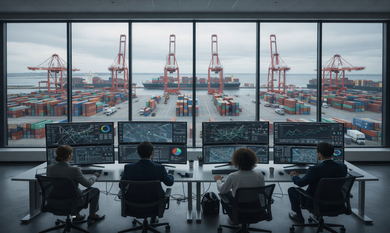
Global supply chains remain volatile. A port delay in one region can disrupt assembly lines thousands of miles away. This is where advanced manufacturing demand planning systems come into play.
In 2026, these systems are integrated with Agentic AI models. They do not simply forecast demand based on history. They monitor:
- Market signals
- Distributor inventory levels
- Macroeconomic indicators
- Real-time sales data
If demand in a specific region accelerates unexpectedly, the system automatically recalibrates production forecasts.
From Production Forecasting to Autonomous Scheduling
Traditional production forecasting creates a target. Human planners translate that into schedules. The process is slow and reactive.
With Autonomous Production Scheduling, the AI directly converts updated forecasts into executable plans. It adjusts line assignments, material allocations, and maintenance windows.
Planning accuracy improves because decisions are based on live data rather than assumptions from last quarter.
Traditional ERP-Based Planning vs. 2026 AI-Driven Capacity Models
Below is a practical comparison to understand the operational shift.
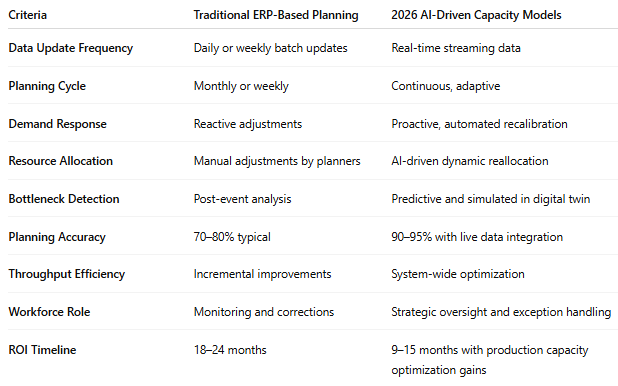
The difference is not incremental. It is structural.
Transitioning to this level of automation requires a robust digital foundation. Most leaders are now moving beyond generic tools and adopting AI-powered manufacturing software solutions that can integrate directly with existing shop-floor hardware.
Implementation Scenarios
Scenario 1: Sudden Demand Surge in Delhi NCR
Consider a large automotive components plant in Delhi NCR. An export client increases orders by 25 percent due to a competitor’s shutdown.
In a traditional setup:
- Planners scramble to assess capacity.
- Overtime decisions take days.
- Material procurement lags.
- Delivery commitments are uncertain.
With AI-driven capacity planning in manufacturing:
- The system instantly simulates the impact of the surge.
- It identifies underutilized lines that can absorb overflow.
- Maintenance windows are rescheduled.
- Supplier orders are triggered automatically.
- Workforce shifts are rebalanced based on skill availability.
Within hours, the plant has a revised, feasible production plan.
Scenario 2: Equipment Failure
If a critical molding machine fails unexpectedly, traditional systems log downtime and escalate to maintenance.
AI-driven models:
- Detect anomaly signals before complete failure.
- Reassign production to parallel lines.
- Adjust delivery schedules.
- Update customer commitment dashboards.
Operations continue with minimal disruption.
Solving the Bottleneck: Production Capacity Optimization
Identifying Hidden Constraints
Most factories believe they know their bottlenecks. Often, they are wrong. Constraints shift depending on product mix and demand variability.
AI continuously analyzes production data to identify micro-bottlenecks. It might discover that:
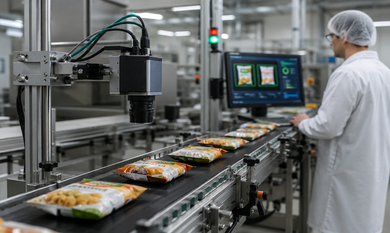
- A packaging station limits throughput during peak hours.
- A specific component supplier introduces variability.
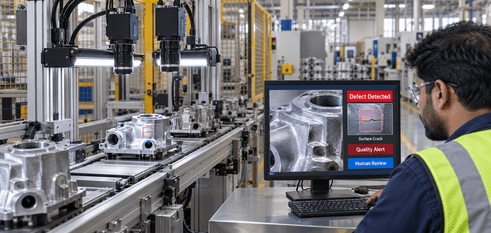
- A quality inspection step slows output under certain SKUs.
This granular visibility drives production capacity optimization beyond surface-level improvements.
Improving Planning Accuracy
Planning accuracy is not just about forecasting demand. It includes:
- Realistic cycle times
- True machine availability
- Labor constraints
- Supply variability
By combining Digital Twin Synchronization with live data, AI models narrow the gap between planned and actual output. Planning accuracy improves significantly, reducing rework, rush shipments, and last-minute firefighting.
Frequently Asked Questions
1. Is AI-driven capacity planning only for large enterprises?
No. While large enterprises benefit from scale, mid-sized manufacturers can adopt modular AI systems. Cloud-based deployments reduce upfront infrastructure costs.
2. How secure is production data in AI systems?
Modern implementations use encrypted data pipelines, role-based access control, and secure cloud architectures. Data governance frameworks ensure compliance with global standards.
3. Will this replace production planners?
It changes their role. Instead of manual scheduling, planners focus on strategy, exception handling, and continuous improvement. Human judgment remains critical.
4. How long does implementation take?
Initial pilots can run within 3 to 6 months. Full-scale integration, including digital twin alignment and autonomous scheduling, may take 9 to 15 months.
5. What about workforce upskilling?
Upskilling is essential. Teams need training in data interpretation, AI dashboards, and cross-functional decision-making. The shift is as cultural as it is technological.
Conclusion
In 2026, factory efficiency is defined by adaptability. The ability to shift production, reallocate resources, and maintain throughput under uncertainty separates leaders from followers.
Ai-driven capacity planning in manufacturing is no longer experimental. It is a competitive lever. It enhances resource utilization, improves planning accuracy, and drives measurable gains in throughput efficiency.
For enterprises looking to lead this transformation, partnering with an experienced AI development company in Delhi is a strategic move. Theta Technolabs brings deep expertise across Web, Mobile and Cloud solutions, helping manufacturers design intelligent, scalable systems aligned with Industry 5.0 goals.
The question is no longer whether AI will reshape capacity planning. The real question is how quickly your factory can adapt.
Start Your Digital Manufacturing Journey
If you are exploring intelligent transformation in your manufacturing operations, now is the time to assess your capacity planning maturity.
Connect with Theta Technolabs to discuss how AI-driven models can align with your production goals, improve planning accuracy, and future-proof your operations.
Email us at sales@thetatechnolabs.com to begin your digital transformation consultation.