

Utility operations have grown significantly more sophisticated in recent years. Grid operators today manage distributed energy sources, fluctuating demand patterns, weather-driven disruptions, and stricter reliability expectations. For grid directors and energy operations managers, maintaining stability while improving efficiency has become a constant balancing act.
Traditional automation has helped utilities streamline processes, but the pace of grid change now requires systems that can reason, adapt, and act with minimal delay.
This is where agentic ai in utility operations management enters the conversation.
Rather than simply executing pre-programmed instructions, agentic AI systems are designed to analyze conditions, evaluate possible actions, and make operational decisions within defined safety frameworks. For utilities preparing for the next decade of grid complexity, these systems represent a strategic shift toward intelligent, self-adjusting operations.
The opportunity is not about replacing human oversight. Instead, it is about equipping operations teams with AI-driven systems capable of maintaining grid stability, optimizing energy distribution, and responding instantly to operational anomalies.
As energy networks expand and demand patterns become less predictable in 2026, many utilities are exploring how this approach could strengthen long-term operational resilience.
The Transition to Intelligent Grid Decision-Making
For years, utilities relied on automation tools designed to perform repetitive tasks: switching operations, load scheduling, and equipment monitoring.
While these tools improved operational efficiency, they still depended heavily on manual decision-making.
The next step in grid evolution involves autonomous utility decision systems that go beyond automation.
Instead of waiting for operators to interpret data, these systems continuously analyze network conditions and identify the best operational responses in real time.
In practical terms, this means:
- Monitoring grid load patterns across regions
- Predicting potential demand spikes
- Reconfiguring distribution flows automatically
- Maintaining stability during unexpected disruptions
This form of ai-driven energy operations introduces a new operational model where AI agents function as intelligent assistants to grid operators.
They observe, recommend, and sometimes execute responses within predefined safety boundaries.
For utility directors, the value lies in decision speed and situational awareness. When thousands of variables affect grid stability, the ability to process data and act instantly becomes a major operational advantage.
Agentic AI systems do not remove human oversight. Instead, they create an environment where operations teams can focus on strategic control rather than constant firefighting.
Autonomous Utility Management Systems
To understand the real potential of these systems, consider a practical scenario involving Autonomous Utility Management Systems.
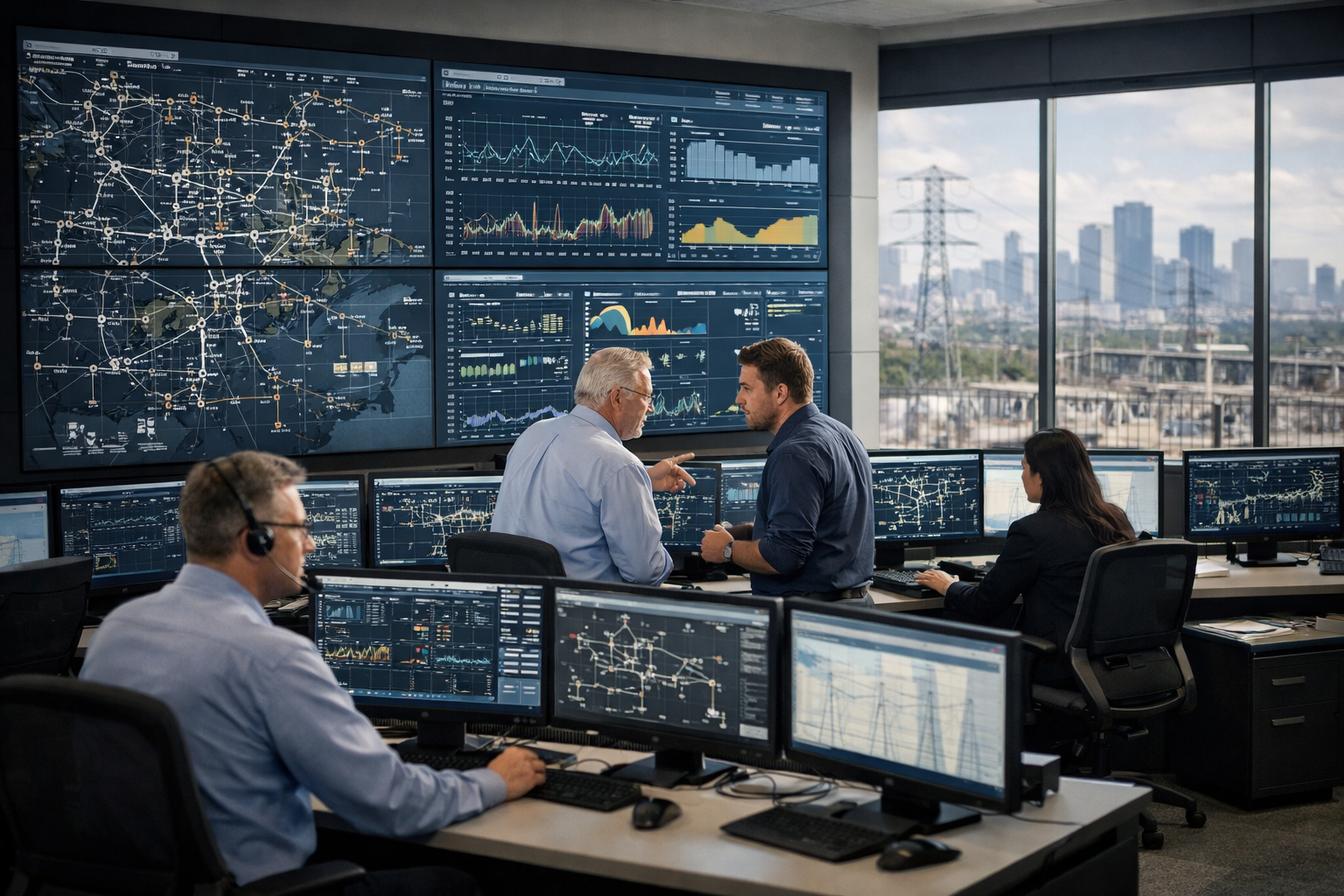
Imagine a regional utility provider responsible for maintaining grid balance in a dense metropolitan environment.
During a sudden heatwave, electricity demand surges due to air-conditioning usage. Simultaneously, solar generation fluctuates due to cloud movement, creating unpredictable load patterns.
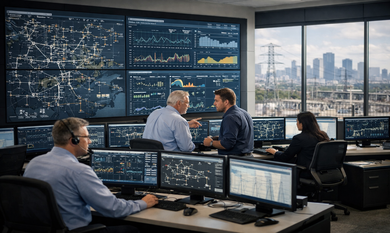
Traditionally, operators would rely on monitoring dashboards and manual intervention to redistribute power and avoid overload conditions.
However, with agentic ai in utility operations management, the system behaves differently.
The AI platform continuously evaluates network conditions using real-time telemetry data from substations, transformers, and distributed energy resources.
Within seconds, it identifies emerging load imbalances and initiates load optimization strategies across the network.
For example, the system may:
- Redirect power flows across alternative distribution paths
- Adjust transformer load distribution
- Activate distributed storage resources
- Coordinate demand response actions
Now imagine this scenario applied to a large urban grid in Kolkata, where population density and peak demand fluctuations can challenge network stability.
An AI-enabled system could autonomously balance regional loads, maintaining grid stability while minimizing the risk of outages.
What makes these systems particularly powerful is their ability to learn from operational history.
Each event—whether a load spike, equipment failure, or weather-driven fluctuation—adds to the system’s knowledge base.
Over time, the system becomes more accurate at anticipating disruptions and recommending corrective actions before issues escalate.
This proactive capability is what makes autonomous utility decision systems an attractive strategy for utilities seeking greater operational resilience.
Key Benefits of Agentic AI in Utility Operations
Load Optimization
One of the most immediate benefits of implementing agentic ai in utility operations management is improved load optimization.
Energy demand rarely follows predictable patterns anymore. Electric vehicle charging, rooftop solar adoption, and changing weather conditions all influence grid behavior.
Agentic AI systems monitor load distribution continuously and adjust energy flows dynamically to maintain balance across the network.
Instead of reacting to overload conditions after they occur, utilities can proactively manage demand patterns and reduce strain on critical infrastructure.
This approach improves network efficiency while extending equipment lifespan, a key priority for utility infrastructure planning.
Predictive Response
A second major advantage lies in predictive response capabilities.
Traditional monitoring systems notify operators when thresholds are exceeded. By that point, operational stress may already be building.
Agentic AI systems operate differently.
They evaluate historical patterns, weather forecasts, equipment behavior, and load trends to identify potential issues before they occur.
For example, if transformer load data suggests a potential overload within the next hour, the system can initiate preventative actions automatically.
This predictive capability helps utilities reduce downtime, maintain grid stability, and respond faster to emerging conditions.
In high-demand environments, this predictive response framework significantly strengthens operational resilience.
Adaptive Control
Trust is one of the biggest concerns utilities face when introducing AI into operational environments.
This is where adaptive control becomes critical.
Agentic AI systems are designed to operate within defined operational boundaries and governance frameworks. They continuously evaluate the effectiveness of their actions and adjust strategies accordingly.
For grid operators, adaptive control provides transparency and confidence in AI-driven decisions.
Instead of acting unpredictably, the system operates with traceable decision logic, allowing engineers to review and refine operational rules when necessary.
Over time, this builds trust between human operators and AI-driven systems.
The result is a collaborative environment where ai-driven energy operations support human expertise rather than replace it.
Frequently Asked Questions
Is Agentic AI safe for critical utility infrastructure?
Yes, when implemented correctly. Agentic AI systems operate within strict operational constraints and safety frameworks. Human operators maintain oversight, and every automated decision can be logged and reviewed. This ensures that grid stability and network protection remain the top priorities.
How difficult is it to integrate these systems with existing utility infrastructure?
Integration typically happens through cloud-based analytics platforms connected to existing SCADA and grid monitoring systems. Most implementations are designed to work alongside current infrastructure rather than replace it, allowing utilities to modernize operations gradually.
What kind of ROI can utilities expect from agentic AI systems?
The return on investment often appears through multiple operational improvements. These include reduced outage risks, better load balancing, improved network efficiency, and lower operational costs due to predictive maintenance and automated grid management.
Will AI replace grid operators?
No. Agentic AI systems are designed to support operators, not replace them. They act as intelligent assistants that process complex data faster than humans can, allowing engineers and operations managers to focus on strategic decision-making and long-term infrastructure planning.
Conclusion
Utility operations are entering a new era where grid complexity continues to grow while reliability expectations remain higher than ever.
For utilities planning long-term modernization strategies, agentic ai in utility operations management offers a compelling path forward.
By enabling autonomous utility decision systems, organizations can strengthen grid stability, improve network efficiency, and build the operational resilience required to handle unpredictable demand patterns.
From load optimization to predictive response and adaptive control, these systems have the potential to reshape how utilities manage energy distribution in the coming years.
Partnering with an experienced agentic ai development company is a key step in exploring this transformation.
Theta Technolabs brings expertise across Web, Mobile, and Cloud solutions, helping energy companies design and deploy intelligent operational platforms tailored for modern grid environments.
Begin the Next Phase of Utility Innovation
Utilities preparing for the next phase of grid transformation can begin by exploring how agentic AI could support their operational strategy.
To discuss potential implementations or consultation opportunities, reach out to the team at Theta Technolabs. 📩 Email: sales@thetatechnolabs.com
Start the conversation on building more resilient, intelligent, and future-ready energy operations.