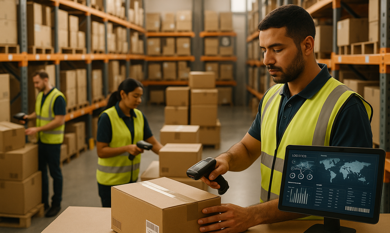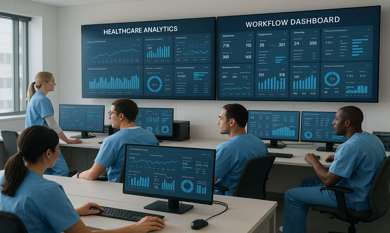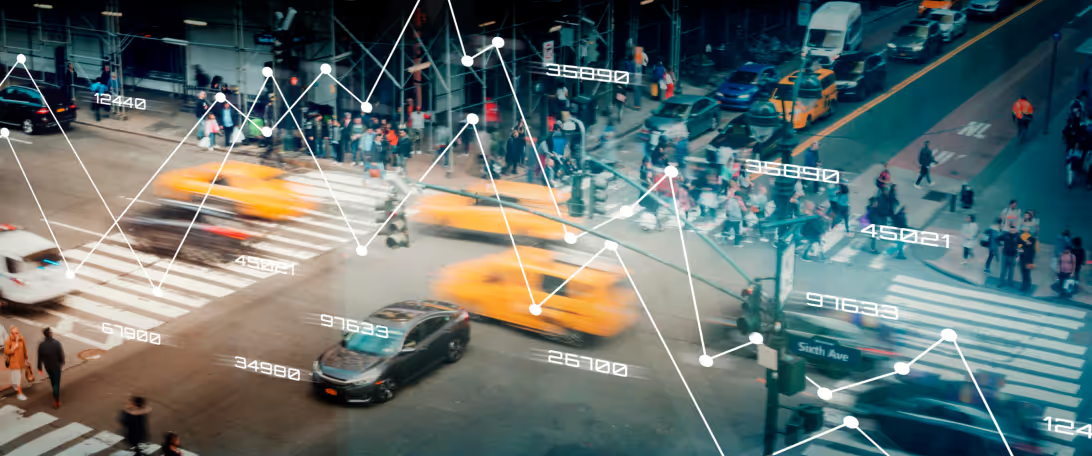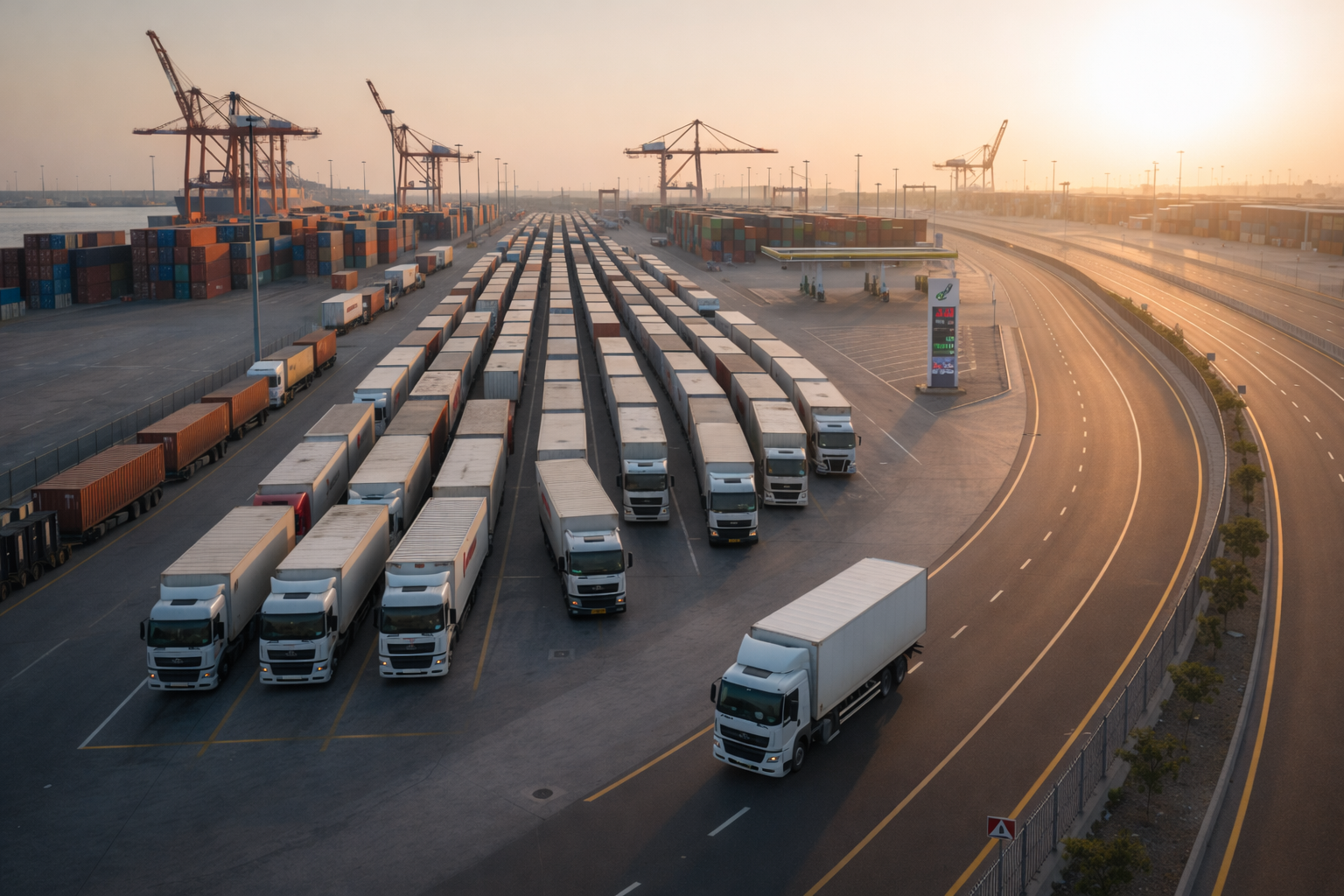


It is early 2026. A logistics director wakes up to an alert, unexpected port congestion due to a sudden regulatory inspection, extreme weather disrupting inland highways, and fuel prices spiking again overnight. Drivers are already en route. Customers are waiting for delivery confirmations. Dispatch teams are scrambling to reroute shipments using spreadsheets, phone calls, and static maps that were outdated the moment the trucks left the yard.
This is no longer an exception. This is the operating reality of logistics in 2026.
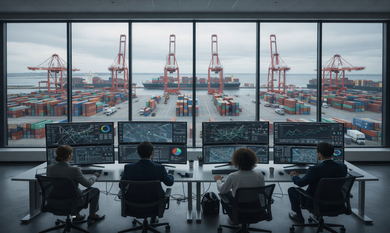
Route planning has become one of the most fragile points in logistics operations. Traffic patterns change hourly. Ports operate under tighter green logistics compliance rules. Cities enforce stricter emissions zones. Last-mile delivery windows keep shrinking.
In this environment, relying on manual planning or static routing tools is not just inefficient, it is a competitive risk. This is why AI-powered logistics planning is no longer an innovation project. It has become the new professional standard for logistics firms that want to survive, scale, and protect margins in 2026.
The Transition from Static to Dynamic Route Planning
Why Old Methods Are Now a Financial Liability
For years, route planning relied on historical data, driver experience, and fixed schedules. That model assumed stability. In 2026, stability no longer exists.
Traditional tools fail because they:
- Cannot react to real-time traffic disruptions
- Ignore live port congestion and yard dwell times
- Do not account for fuel price volatility
- Struggle with multi-stop last-mile complexity
Relying on static routes embeds inefficiencies into every delivery cycle, undermining delivery efficiency from the start. A route planned at 6 a.m. becomes inaccurate by 8 a.m. Yet trucks continue following it, burning fuel, missing delivery windows, and increasing driver stress.
AI-driven systems replace static assumptions with continuous decision-making. Instead of asking “What was the best route yesterday?”, AI asks “What is the best route right now, and what will it look like in the next hour?”
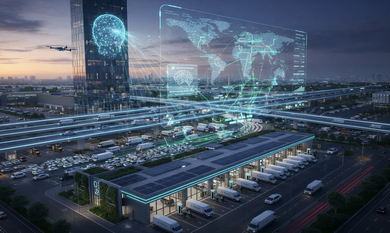
In practice, modern AI route optimization systems continuously evaluate traffic conditions, fuel impact, and delivery priorities to keep routes aligned with real-world changes throughout the day.
This shift from static to dynamic routing is the foundation of modern B2B fleet management in 2026.
Core Benefits for the B2B Bottom Line
Fuel and Carbon Efficiency for 2026 Green Compliance
Fuel now represents more than just a financial metric—it’s a key compliance factor in AI-powered logistics planning.
AI analyzes:
- Live fuel consumption patterns
- Vehicle load weight
- Road gradients and idle time
- Emissions impact per route
By continuously adjusting routes, AI reduces unnecessary detours and idle time, helping firms meet green logistics compliance requirements while cutting fuel costs by double-digit percentages.
This is not theoretical. In 2026, environmental audits increasingly tie routing decisions directly to compliance reporting.
Predictive Traffic and Port Syncing
AI route optimization systems go beyond reacting to disruptions—they proactively forecast them before they escalate.
Using real-time feeds from traffic systems, ports, weather networks, and historical congestion data, AI systems identify risk patterns before they become bottlenecks.
For example:
- Detecting early signs of port queue buildup
- Rerouting inbound trucks before yard congestion peaks
- Adjusting ETAs proactively for downstream warehouses
This predictive capability enables real-time route optimization, protecting delivery commitments and reducing cascading delays across the logistics network.
Driver Satisfaction and Retention
Driver burnout is a silent cost in logistics.
Poor routing leads to:
- Longer shifts
- Unpredictable schedules
- Increased stress during peak hours
AI-optimized routes balance efficiency with driver workload. They minimize unnecessary stops, reduce time spent in congestion, and create more predictable workdays.
In 2026, driver satisfaction is not a soft metric. It directly impacts retention, recruitment costs, and service reliability, all core pillars of logistics efficiency.
A Realistic 2026 Scenario
How a Mid-Sized Logistics Firm Gained an Edge
Consider a mid-sized regional logistics firm operating across industrial corridors and port-connected routes, including high-volume trade lanes linked to Dubai.
Before AI:
- Dispatch teams planned routes manually every morning
- Delays were handled reactively through phone calls
- Fuel overruns averaged 12 to 15 percent monthly
- Last-mile costs kept rising with no clear explanation
In early 2026, leadership decided to transition to AI-driven route optimization. The shift was driven by the need for intelligent fleet routing solutions that could adapt automatically to congestion, port delays, and changing delivery priorities without manual intervention.
Within months:
- Routes adjusted dynamically based on live traffic and port conditions
- Fuel consumption dropped significantly due to reduced idle time
- On-time delivery performance improved even during peak congestion
- Dispatch teams shifted from firefighting to exception management
Most importantly, the firm gained pricing confidence. They could commit to tighter delivery windows without padding margins for uncertainty. That operational confidence became a competitive differentiator.
This is where intelligent fleet routing solutions shift routing from a pure operational expense to a long-term strategic asset.
Implementation Through the “What If” Lens
What If You Start Small and Scale Smart?
One common misconception is that AI requires a full system overhaul. In reality, most firms begin with focused use cases. By combining live operational data with advanced fleet analytics, decision-makers gain deeper visibility into cost drivers, performance gaps, and optimization opportunities.
A practical approach includes:
- Integrating AI with existing GPS and telematics data
- Starting with high-volume or high-cost routes
- Measuring ROI through fuel savings and delivery performance
- Expanding gradually to last-mile optimization
The ROI conversation is critical. AI-driven routing typically delivers value through:
- Reduced fuel spend
- Lower overtime and detention costs
- Improved asset utilization
- Better customer satisfaction metrics
In 2026, the question is no longer “Can we afford AI?” but “Can we afford not to optimize?”
Frequently Asked Questions
Is AI route optimization too expensive for small or mid-sized firms?
No. Many platforms scale based on fleet size and usage. SMEs often see faster ROI because inefficiencies are more visible and easier to correct.
Does AI replace human dispatchers?
No. AI augments dispatchers. It handles data-heavy decision-making so humans can focus on exceptions, relationships, and strategic planning.
How long does implementation take?
Initial deployments can start delivering insights within weeks, especially when built on existing fleet data.
Is AI reliable during unexpected disruptions?
AI systems are designed for disruption. They adapt faster than manual processes and continuously recalibrate as conditions change.
Conclusion: AI Is the Routing Standard for 2026
In 2026, route planning is no longer about finding the shortest path on a map. It is about navigating constant volatility, stricter compliance requirements, and rising customer expectations in real time. Logistics networks have become too dynamic for manual decisions and static tools to keep up.
AI has become the backbone of modern logistics operations. It enables AI route optimization 2026, strengthens overall logistics efficiency, supports green logistics compliance, and plays a critical role in reducing last-mile costs without compromising service quality. More importantly, it gives decision-makers visibility and control in situations where uncertainty is the norm.
For logistics firms that want to grow, scale, and remain competitive, AI is no longer optional. It is the baseline capability that defines professional, future-ready operations in this decade.
At Theta Technolabs, this shift is approached with a clear business-first mindset. As an AI development company in Dubai, the focus remains on building scalable, real-world solutions supported by strong Web, Mobile, and Cloud capabilities that strengthen logistics operations end to end.
The firms that act now will not just keep up with change. They will lead it.
Prepare Your Logistics Operations for 2026 and Beyond
If your route planning still relies on static systems, now is the time to rethink your strategy.
Connect with Theta Technolabs to explore how AI-driven route optimization can improve efficiency, compliance, and profitability across your logistics operations.
📩 Reach out to us at sales@thetatechnolabs.com to start the conversation.























































.png)





.png)