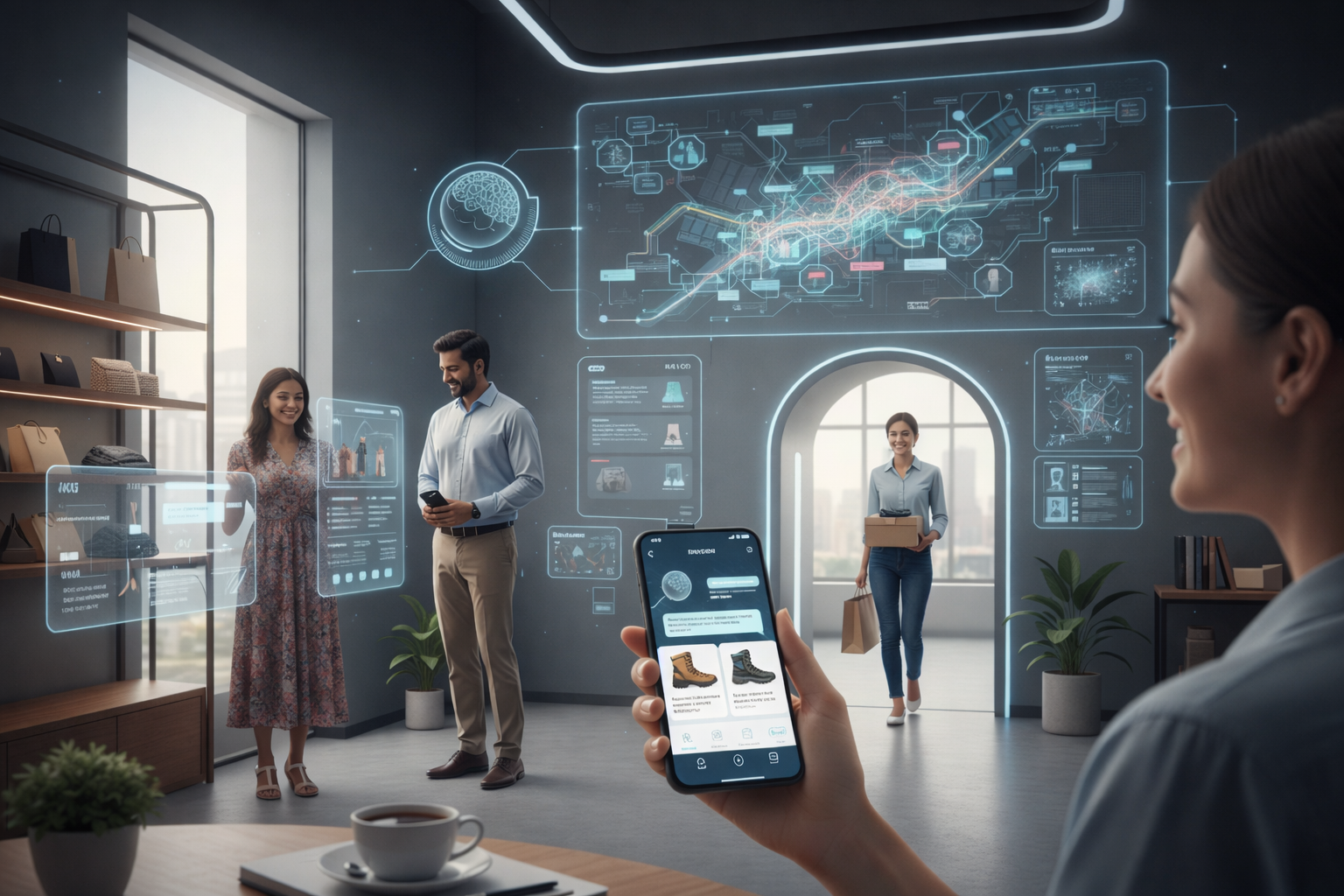


Walk into a retail business in 2026 and you can feel the shift immediately. Decisions happen faster. Customers feel understood without being tracked in uncomfortable ways. Teams spend less time reacting to problems and more time improving experiences.
This is the reality when generative AI in retail customer experience moves from pilot projects into the core operating system of retail. It is no longer about experimenting with chatbots or recommendation widgets. It is about rethinking how discovery, engagement, purchase, and loyalty work when intelligence is built into every interaction.
For retail leaders, this is not a technology conversation. It is a growth, efficiency, and loyalty conversation.
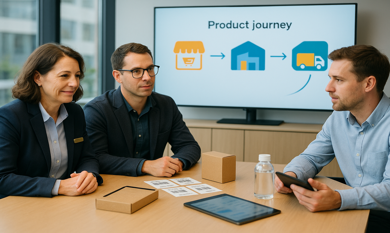
What If Generative AI Powered the Entire Customer Journey?
Imagine a retail environment where every step of the customer journey is quietly optimized in real time.
Discovery Feels Intentional, Not Random
A customer opens a brand app or walks into a physical store. Instead of seeing generic promotions, the experience adapts instantly based on context, behavior, and intent signals.
Generative AI understands:
- Browsing patterns across channels
- Seasonal preferences and local demand
- Past returns, not just purchases
This leads to discovery experiences that feel helpful rather than promotional.
Engagement Becomes Conversational
Instead of scripted flows, customers interact with AI systems that can:
- Explain products in natural language
- Compare options based on actual needs
- Adjust tone and detail level automatically
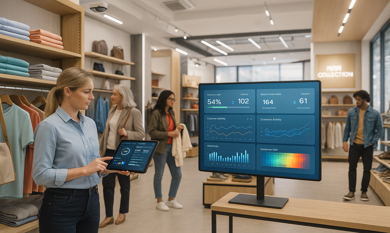
This conversational layer is increasingly moving into the physical aisle. For example, modern implementations like an AI-powered search engine kiosk for retail apparel stores allow shoppers to interact with an in-store terminal as they would with a personal stylist. By using image recognition and natural language processing, these kiosks can identify styles from a customer's uploaded photo and immediately locate matching inventory—even for items not currently on the display rack—effectively turning a physical showroom into an "endless aisle."
This is AI-driven retail personalization at work. Not personalization based on static rules, but personalization that evolves with each interaction.
Checkout Friction Quietly Disappears
When generative AI is the backbone:
- Payment options adapt to customer comfort
- Cart abandonment triggers real-time intervention
- Fraud detection runs in the background without slowing transactions
The customer does not notice the system. They just experience speed and clarity.
Post-Purchase Is No Longer an Afterthought
Returns, support, and loyalty are handled by systems that understand the full journey. Support agents receive AI-generated context. Customers receive proactive updates before they ask.
This is what true customer journey optimization looks like in practice.
From Retail Analytics to Engagement Insights
Most retailers already collect massive amounts of data. The problem has never been access. It has been interpretation.
The Shift from Dashboards to Decisions
Traditional retail analytics answer questions like:
- What sold last month?
- Which store underperformed?
- Where did customers drop off?
Intelligent customer experience platforms powered by generative AI answer a different set of questions:
- Why did customers hesitate at this step?
- What emotional signals predict churn?
- Which experience changes will increase lifetime value?
How Generative AI Transforms Data into Action
Generative AI connects structured data like transactions with unstructured data like:
- Customer reviews
- Chat transcripts
- Voice interactions
- In-store behavioral signals
The result is engagement insights that teams can act on immediately.
Examples include:
- Identifying early signals of loyalty decline before revenue drops
- Adjusting store layouts based on real movement patterns
- Personalizing campaigns without manual segmentation
This is not automation for efficiency alone. It is intelligence for growth.
Old Retail vs 2026 AI Retail
Real-World Scenario: A 2026 Retail Brand Solves the Returns Problem
The Challenge
A mid-sized fashion retailer was facing rising return rates. Traditional analytics showed what was returned, but not why. Customer surveys gave inconsistent answers.
The GenAI-Driven Shift
By implementing generative AI across digital and in-store touchpoints, the brand:
- Analyzed product reviews, chat logs, and fit feedback together
- Identified language patterns linked to sizing confusion
- Updated product descriptions dynamically based on real buyer concerns
The Outcome
Within six months:
- Return rates dropped by 22 percent
- Customer satisfaction scores increased
- Store associates spent less time handling complaints
This was not achieved by pushing sales harder. It happened because the experience became clearer and more human.
Retail teams in global innovation hubs are already using similar models as reference architectures for global rollout. In fact, many of these brands are collaborating with a specialized AI development company in Bengaluru to bridge the gap between complex data streams and intuitive, real-world customer interfaces. This synergy between local technical expertise and global retail vision is what makes these transformations possible.
Trust, Data, and the Human Role
Data-Backed Outlook for 2026
Industry forecasts suggest that by late 2026:
- 40 percent of enterprise customer-facing applications will include generative AI capabilities by default
- Retailers using AI-led experience platforms will see measurable gains in retention and basket size
Trust Is the New Differentiator
As intelligence increases, trust becomes non-negotiable.
Leading retailers focus on:
- Transparent data usage policies
- Consent-driven personalization
- Secure AI models aligned with compliance standards
Human and AI Working Together
The strongest results come when:
- AI handles pattern recognition and scale
- Humans focus on judgment, empathy, and creativity
Store managers, marketers, and operations teams do not get replaced. They get better tools to make better decisions.
This balance is what separates sustainable AI adoption from short-lived experimentation.
Frequently Asked Questions
1. Is generative AI only relevant for large retail chains?
No. Scalable platforms allow mid-sized and regional retailers to adopt AI in phases without massive upfront investment.
2. How does AI-driven retail personalization avoid being intrusive?
By focusing on context and intent rather than personal identity. The goal is relevance, not surveillance.
3. What role do intelligent customer experience platforms play?
They act as the central layer connecting data, AI models, and customer touchpoints into a single experience engine.
4. Does generative AI replace human staff in retail?
No. It reduces repetitive tasks and enhances decision-making, allowing teams to focus on high-value interactions.
5. How long does it take to see ROI from GenAI implementation?
Most retailers see operational improvements within months, with customer loyalty gains compounding over time.
Conclusion: Building the Retail Experience of the Next Decade
The future of generative AI in retail customer experience is not about futuristic concepts. It is about practical systems that make retail simpler, smarter, and more human at scale.
Retail leaders who invest now are not chasing trends. They are building foundations that support long-term loyalty, operational efficiency, and differentiated brand value.
Organizations exploring generative AI development services increasingly partner with teams like Theta Technolabs, which brings deep experience across Web, Mobile and Cloud platforms to help retailers design, integrate, and scale intelligent customer experience ecosystems aligned with real business goals.
Start Building Your AI-Driven Retail Experience
If you are evaluating how generative AI can transform your retail customer journey, now is the right moment to act.
Connect with the experts at Theta Technolabs to explore strategy, architecture, and real-world implementation paths tailored to your specific business goals. Our team is ready to help you navigate the 2026 retail landscape with precision.
📩 Email us at: sales@thetatechnolabs.com
Let us help you turn intelligence into measurable retail growth.































































.png)





.png)