

Orthopedic hospitals in Bengaluru are under growing pressure to deliver faster, more connected, and more patient-friendly care. The challenge is not limited to clinical treatment. It also includes how patients book appointments, receive reminders, ask pre-surgery questions, follow recovery instructions, and stay engaged after discharge. When these touchpoints are handled manually, delays and communication gaps start affecting both operational efficiency and patient experience.
This is where an AI chatbot for orthopedic hospitals can create real value. Instead of acting as a basic support widget, modern conversational systems can function as a digital front desk, a patient communication layer, and a workflow support tool across the orthopedic care journey. For hospitals exploring better service delivery, conversational AI healthcare Bengaluru is becoming a practical way to improve responsiveness, reduce front desk pressure, and strengthen continuity of care. Hospitals are increasingly adopting scalable healthcare AI systems to manage growing patient communication demand without increasing operational costs.
Operational Challenge
Orthopedic hospitals manage a high volume of structured but time-sensitive interactions. Patients often need help with appointment booking, specialist routing, insurance-related questions, surgery preparation, physiotherapy schedules, and post-operative guidance. When these processes rely too heavily on phone calls and manual coordination, several problems can emerge.
Appointment delays are one of the most common issues. Front desk teams may struggle to handle booking requests, rescheduling, cancellations, and reminders efficiently during peak hours. This often leads to missed calls, delayed confirmations, and higher no-show rates.
Another issue is fragmented patient communication. A patient may receive treatment successfully but still feel unsupported if pre-operative instructions are unclear or follow-up communication is inconsistent. In orthopedic care, where treatment often continues beyond the initial consultation, this gap can affect satisfaction and retention.
Hospitals also face internal workflow inefficiencies. Staff may spend too much time answering repetitive questions such as doctor availability, admission preparation, rehabilitation timelines, and report collection. This reduces productivity and keeps skilled teams occupied with routine coordination work instead of higher-value patient service.
For decision-makers evaluating AI patient engagement orthopedic care, the real opportunity lies in improving these everyday interactions without disrupting core hospital operations.
How the Solution Can Be Implemented
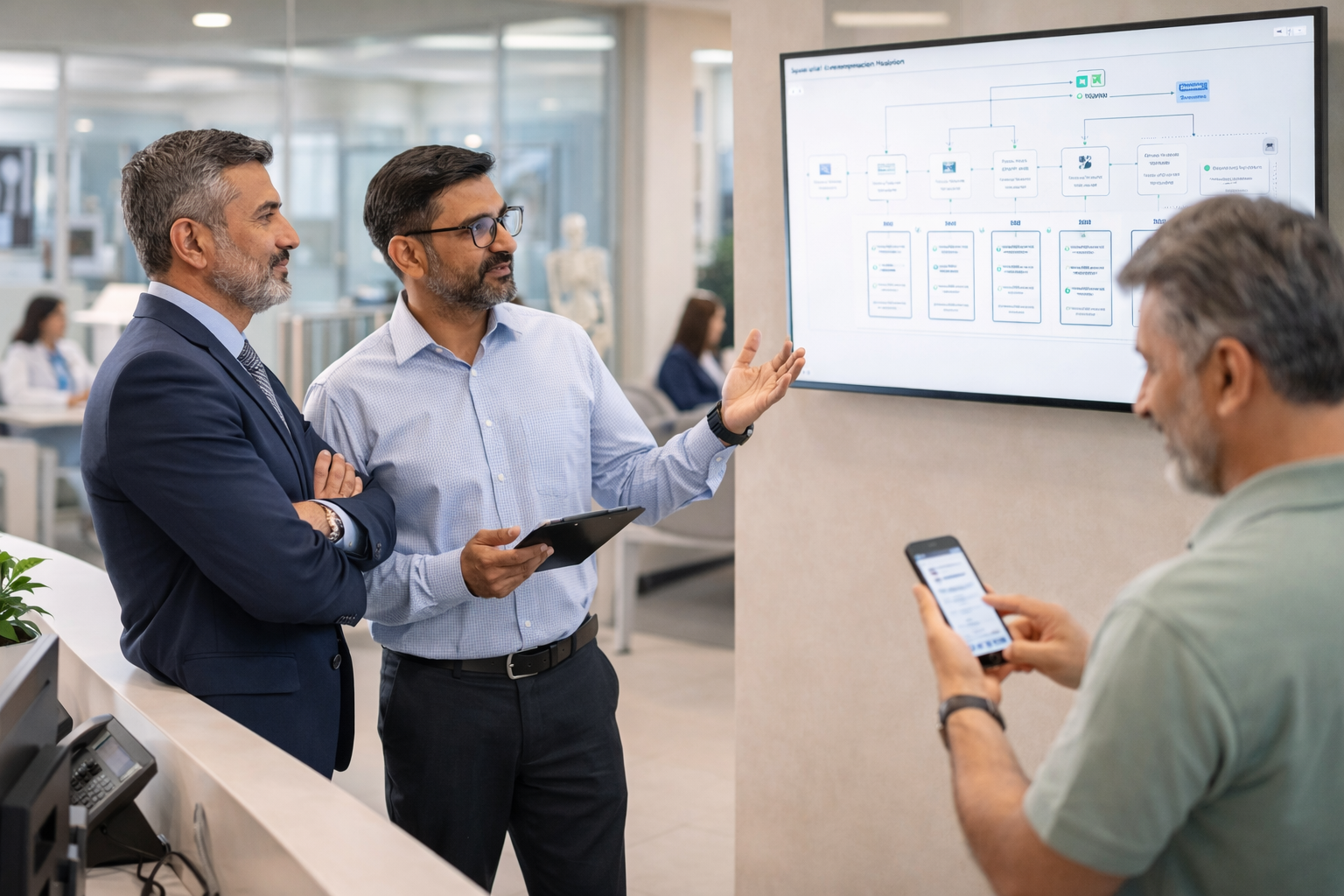
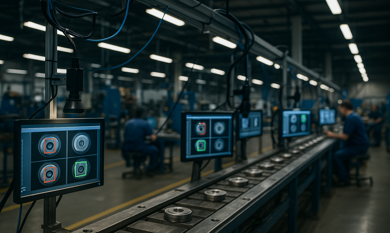
Fig.: AI chatbot workflow for orthopedic hospitals covering patient inquiry, appointment scheduling, and post-treatment engagement
Implementation should begin with the patient journey, not just the technology. Hospitals first need to identify the highest-volume communication points where automation can support care delivery. In orthopedic settings, these often include appointment booking, doctor selection, surgery preparation, post-treatment follow-up, and rehabilitation reminders.
A conversational system can then be introduced in phases.
In the first phase, the chatbot can handle appointment scheduling, rescheduling, cancellation requests, and common patient queries. This supports AI appointment scheduling healthcare workflows and reduces call-center dependency.
Before full deployment, hospitals should conduct User Acceptance Testing (UAT) with front desk teams, doctors, and coordinators to validate real-world workflow alignment and ensure the system works correctly in daily operations.
In the third phase, hospitals can extend usage to pre- and post-operative communication. This includes sending preparation checklists, medication reminders, physiotherapy follow-up prompts, and recovery-related FAQs. This is especially useful for AI chatbot for post-surgery patient follow-up use cases, where timely communication can help keep patients informed and engaged.
A hospital can also introduce multilingual support so patients can interact in English, Kannada, Hindi, or other preferred languages. For a diverse metro market like Bengaluru, this can improve accessibility and response quality significantly.
This is where AI-driven patient communication solutions become more than a convenience feature. They can act as a structured engagement layer that connects patient intent with hospital workflows in a faster and more scalable way.
Key Capabilities
A well-designed orthopedic hospital chatbot should support more than basic messaging. Its capabilities should align with actual patient and staff needs.
Smart appointment coordination helps patients find the right doctor, choose a slot, confirm visits, and receive reminders automatically. This directly supports orthopedic patient workflow automation and reduces missed appointments.
Digital front desk assistance allows the system to answer common questions about OPD timings, doctor schedules, insurance documentation, admission steps, and consultation types. This makes digital front desk healthcare AI highly relevant for specialty hospitals that want to reduce repetitive front-desk work.
Pre-operative guidance can help patients understand fasting rules, document requirements, arrival timing, and other surgery-related instructions.
Post-treatment communication supports discharge guidance, check-in reminders, physiotherapy scheduling, and patient recovery engagement. This is where AI-powered patient communication systems and automated orthopedic follow-up workflows can improve continuity of care and patient ROI
Patient query handling enables the chatbot to assist with common queries related to follow-up visits, general guidance, and rehabilitation processes, while routing clinical concerns to appropriate medical staff and report access. A strong hospital chatbot for patient queries setup can improve response speed without increasing staffing costs.
Escalation logic ensures complex or urgent issues are handed over to human staff at the right time, which is critical in a healthcare setting.
Technology Stack
To implement healthcare chatbot development services successfully, the architecture should be secure, integrated, and easy to manage.
At the interface level, the chatbot can be deployed on the hospital website, mobile app, WhatsApp, or patient portal. For many hospitals, a multi-channel approach works best because patients do not all use the same communication path.
At the intelligence layer, natural language processing and intent recognition models help the system understand patient questions in conversational form. This is where NLP and machine learning can support structured, context-aware dialogue.
At the workflow layer, the chatbot should integrate with hospital systems such as HIS, EHR, CRM, appointment engines, billing tools, and notification services. These integrations are essential for healthcare chatbot development services that go beyond static FAQs.
At the automation layer, triggers can be created for confirmations, reminders, missed appointment recovery, post-op check-ins, and patient satisfaction follow-ups. This is how hospitals can automate orthopedic OPD workflows using AI without redesigning every operational process from scratch.
For a Bengaluru-based hospital group, cloud deployment with role-based access control, data residency compliance, and local healthcare data regulations, audit logs, and encrypted communication can provide both scalability and operational trust.
Commercial Impact
The commercial case for an AI chatbot for orthopedic hospitals is often strong because it addresses both patient-facing and operational inefficiencies.
Reduced no-shows are one of the most visible gains. AI reminders and quick rescheduling support can help hospitals recover appointment revenue and use doctor time more efficiently. In practical hospital deployments, noticeable reductions in no-show rates have been observed in some implementations, depending on workflow consistency and patient engagement in pilot hospital deployments, when reminders and follow-ups are handled consistently.
Administrative workload can also drop significantly. When routine queries are automated, hospitals can reduce front-desk workload by up to 40 percent in observed high-volume hospital workflows. This allows teams to focus on escalations, in-person care, and more sensitive service interactions.
Patient retention can improve as well. Better communication before and after treatment often leads to higher trust, stronger follow-up compliance, and better patient experience. In specialty care, improvements in patient retention may be observed as communication and follow-up processes become more consistent based on structured follow-up systems
For hospitals evaluating AI solutions for hospital appointment scheduling in Bengaluru, the ROI is not just about cost savings. It also includes improved service quality, better patient convenience, and stronger use of existing staff resources.
Adoption Considerations
Healthcare AI systems must be implemented carefully. Patient data privacy, consent management, clinical boundaries, and workflow accuracy all matter.
Hospitals should define which conversations the chatbot can handle autonomously and which must be escalated to staff. It should not provide unsupported medical advice or replace physician judgment. Instead, it should support operational communication and structured patient engagement.
Data security is equally important. Encryption, access controls, audit trails, and compliant cloud infrastructure should be part of the rollout from day one. Integration with HIS or EHR platforms should also be validated to avoid workflow inconsistencies.
Adoption depends on usability. If the system feels too complex or too generic, patients and staff may ignore it. That is why conversational AI use cases in orthopedic hospitals should be designed around real specialty workflows, not broad hospital templates.
Real-World Example
Consider a mid-sized orthopedic hospital in Bengaluru that handles consultations, surgeries, and rehabilitation services across multiple specialties. The hospital receives a high volume of calls every day for appointment booking, doctor routing, pre-surgery instructions, and follow-up questions after procedures.
By implementing AI-powered patient communication systems, the hospital can automate appointment confirmations, send reminders before consultations, guide patients on admission preparation, and trigger follow-up messages after surgery. It can also route physiotherapy-related queries to the right department and offer multilingual support for local patients.
In a setup like this, a hospital can reduce missed appointments, ease pressure on front-desk teams, and create a more responsive experience across the care journey. This is a strong example of how AI chatbots improve orthopedic patient engagement when implementation is aligned with actual workflows.
Why This Matters
For hospital administrators, this is about operational efficiency and service quality. For orthopedic hospital owners, it is about improving throughput, reducing leakage, and strengthening patient loyalty. For CMOs and digital transformation leaders, it is about modernizing communication without creating unnecessary complexity.
This matters even more in Bengaluru, where private hospitals are competing on both care outcomes and patient experience. As healthcare infrastructure becomes more digital, patients increasingly expect faster communication, easier booking, and clearer follow-up support.
That is why conversational AI healthcare Bengaluru is gaining attention. It offers a practical path for hospitals that want scalable engagement, structured automation, and specialty-specific workflow improvement.
Frequently Asked Questions
- What is an AI chatbot for orthopedic hospitals?
An AI chatbot for orthopedic hospitals is a conversational system that can help manage appointment booking, patient queries, reminders, and follow-up communication across orthopedic care workflows.
- How can conversational AI improve patient engagement in orthopedic care?
It can improve response speed, reduce communication gaps, send timely reminders, and support patients before and after treatment. This helps create a more connected care experience.
- Can AI chatbots integrate with hospital systems like HIS or EHR?
Yes. Modern healthcare chatbot platforms can be integrated with HIS, EHR, CRM, and scheduling tools so patient communication connects with actual hospital workflows.
- Is conversational AI useful only for large hospitals?
No. Mid-sized specialty hospitals can also benefit, especially when front-desk teams are overloaded and patient communication processes are still handled manually.
- What are the main use cases for AI in orthopedic patient communication?
Common use cases include appointment scheduling, rescheduling, pre-surgery instructions, OPD query handling, post-surgery follow-up, physiotherapy reminders, and multilingual support.
- What should hospitals consider before implementing healthcare chatbots?
They should review data privacy, escalation rules, system integration needs, language support, workflow fit, and the difference between operational automation and clinical decision-making.
- How do AI-driven patient communication solutions create ROI?
They can reduce no-shows, lower administrative workload, improve patient retention, and make staff time more productive. The value usually comes from both efficiency and better patient experience.
Conclusion
Orthopedic hospitals require specialized, workflow-aligned automation rather than generic solutions. They need communication systems that fit the rhythm of specialty care, from appointment scheduling to post-operative engagement. A well-implemented AI chatbot for orthopedic hospitals can help reduce delays, improve responsiveness, support multilingual communication, and strengthen patient continuity across the treatment journey.
For hospitals looking to modernize patient engagement in a practical and secure way, the right implementation approach matters as much as the technology itself. A specialized partner can help align conversational workflows with hospital systems, operational priorities, and patient expectations. For organizations evaluating this shift, working with an AI development company in Bengaluru can create a stronger foundation for long-term digital care delivery.
Contact Our Team
If your hospital is exploring better ways to manage appointments, patient queries, and post-treatment engagement, Theta Technolabs can help you design secure and scalable conversational AI solutions tailored for healthcare workflows.
Our team supports healthcare organizations with Web, Mobile, and Cloud solutions that connect operational efficiency with better patient communication outcomes. To discuss your orthopedic hospital use case, reach out at sales@thetatechnolabs.com.




























































.png)





.png)