

In institutional trading, typing a single extra zero or delaying an order by even a few seconds can create serious financial risk. In Delhi, brokerage firms, WealthTech startups, and institutional trading desks are managing high transaction volumes every day. While modern digital trading infrastructure has made execution faster, the manual touchpoints where humans interact with these systems still remain vulnerable to mistakes. Rushed keyboard inputs, misheard phone orders, and multi-screen trading setups can create costly operational friction.
To safeguard capital and protect thin margins, market participants are looking for better alternatives to rigid manual data entry. That is why more brokerages are exploring advanced voice-driven tools, where a spoken instruction can be converted into clean and structured order fields. When deployed correctly, conversational AI reduces trade errors by acting as an intelligent real-time safety layer. Rather than functioning as an autonomous executor, custom conversational AI development in Delhi can help de-risk manual data entry while ensuring that reducing order entry errors in online broking becomes a practical standard for modern trading desks.
The Core Operational Vulnerability: Deconstructing Trade Execution Errors
To understand how conversational tools support a trading desk, it is important to look at how manual mistakes happen in the first place. When market volatility increases, dealers and retail traders often face severe cognitive overload. They may need to manage dense trading terminals, client instructions, live price movements, and margin checks at the same time. In such high-pressure situations, simple mistakes become more likely. These can include hitting “0” twice while entering volume, choosing the wrong contract expiry from a crowded dropdown menu, or swapping digits in a limit price.
Beyond typing mistakes, vulnerabilities also exist in traditional verbal broking desks. When institutional clients call in large orders over busy phone lines, similar-sounding symbols or contract names can be misunderstood by a hurried operator. A dealer may mishear an asset code or mix up option strikes during a fast-moving market session.
These trade execution errors in brokerage operations do more than create immediate losses. They can disrupt reconciliation, increase operational workload, affect client trust, and create compliance pressure. Traditional trading terminals may include basic validation checks, but these warnings are often passive and easy to overlook. This highlights the need for a proactive and intelligent fintech software development solution that captures human intent naturally and validates transactional data before it reaches the execution layer.
Custom Conversational AI Development vs. Off-the-Shelf Software
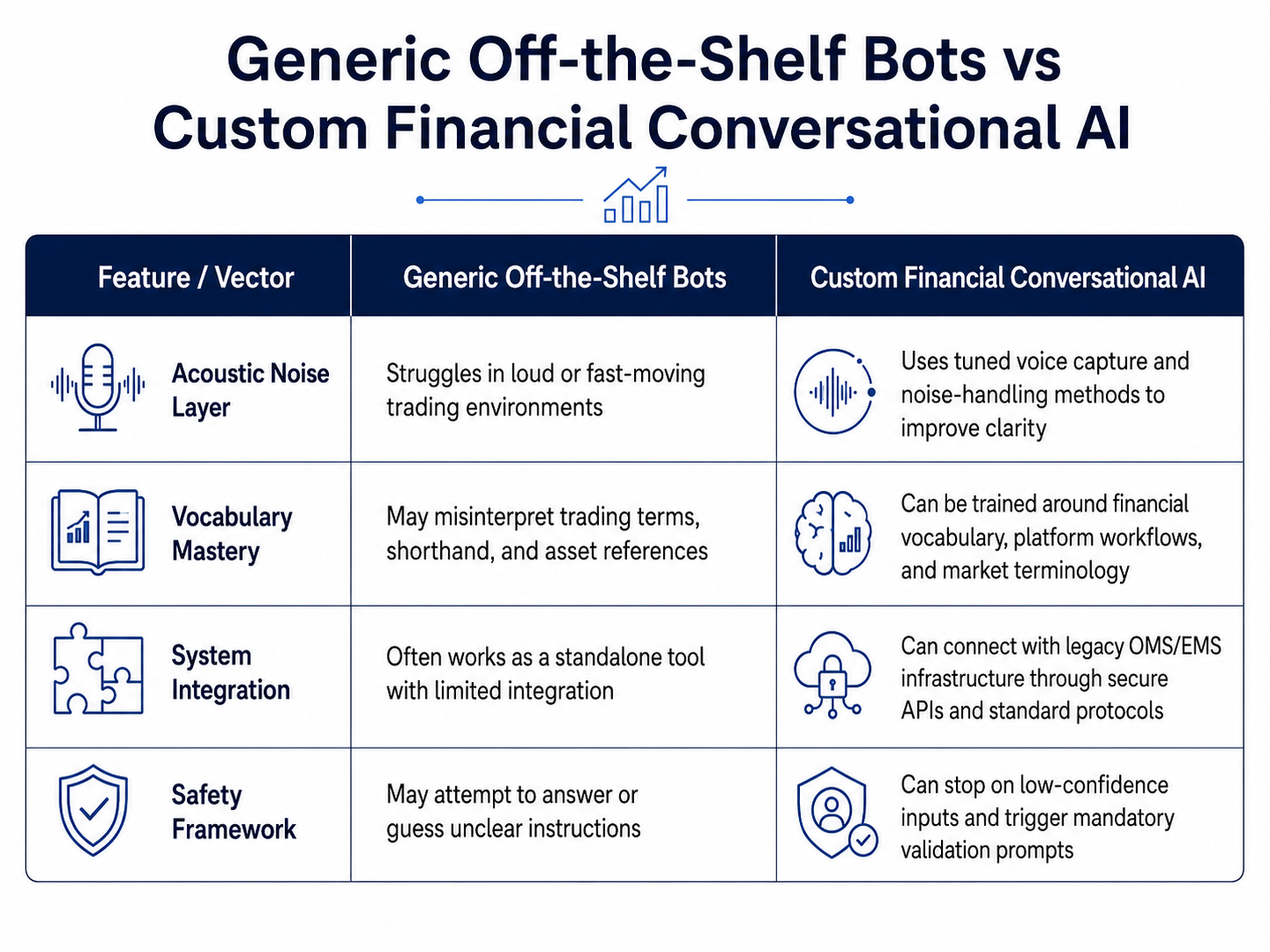
Many brokerage product teams assume that any standard speech-to-text tool or retail chatbot can handle trade order entry. This can be a risky assumption. Generic language systems are not designed for financial trading environments. They may struggle to understand trading terms, financial shorthand, option strategies, stop-loss instructions, margin-related commands, and multi-step order requests.
A basic chatbot may work for simple support queries, but brokerage platforms need a more controlled and domain-specific system. Trade entry requires accuracy, context, user validation, and secure system integration. Even a small misunderstanding can create financial or operational risk.
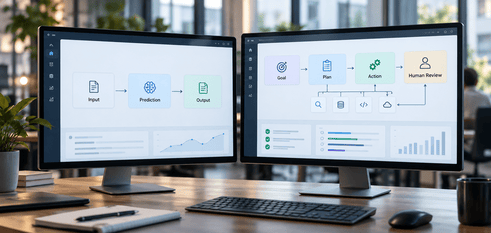
Enterprise-grade trading platforms require custom architecture. This demands specialized conversational AI development services engineered to work as a secure middleware layer between the user interface and the core trading engine. A dedicated financial AI model should combine semantic parsing with rule-based trading logic. It should not guess user intent. Instead, it should map spoken or written instructions to the exact fields required by the existing Order Management System.
The Enterprise Architecture and Tech Stack
To build a reliable conversational AI layer for brokerage operations, Theta Technolabs can implement a specialized financial technology stack designed for accuracy, speed, security, and audit readiness.
Acoustic & Transcription Layer: This layer captures spoken commands and converts them into text. It should be optimized for trading environments, background noise, different accents, and financial terminology.
NLP & Intent Parsing Layer: This layer identifies the user’s intent and extracts key trade variables such as buy or sell action, quantity, asset type, order type, price, and validity.
Orchestration Framework: This layer connects AI interpretation with strict rule-based guardrails. It ensures that the system follows defined trading workflows instead of producing uncertain or unsupported actions.
Integration Core: This layer connects the conversational system with the existing OMS or EMS through secure APIs, WebSockets, or standard financial messaging protocols.
Secure Audit Layer: This layer stores voice inputs, transcripts, validation prompts, confirmation actions, timestamps, and system confidence scores for review and compliance support.
The Pillars of Defense: Natural-Language Confirmation & Validation Prompts
The core philosophy of a safer conversational trading system is simple: the AI structures the data, but the human retains execution authority. To achieve this, custom platforms use two important layers, natural-language confirmation and dynamic validation prompts for stock trading.
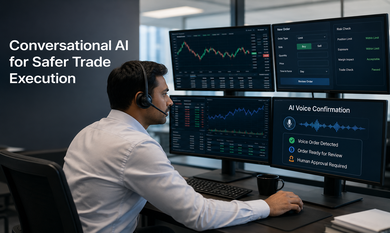
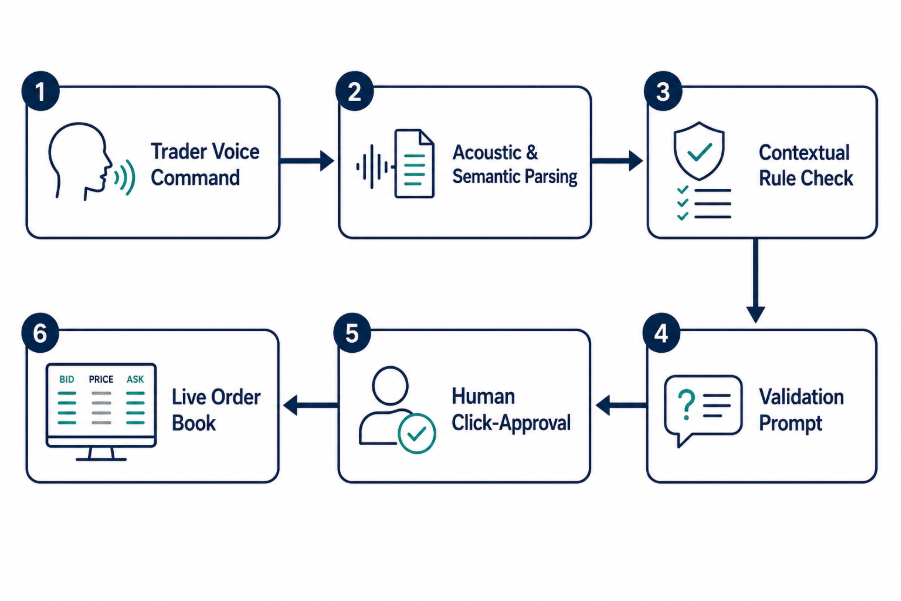
When a broker inputs a trade through voice, the system processes the request through a multi-stage validation pipeline designed to catch anomalies before they reach the market order book.
Acoustic Isolation: The system captures the voice input and reduces background disturbance as much as possible.
Intent Parsing: The AI extracts the primary variables, such as action, quantity, asset type, order type, and price condition.
Anomaly Scanning: The platform checks the parsed data against market boundaries, user restrictions, margin conditions, and historical trading patterns. If a dealer requests a quantity that is unusually high, or if the spoken command is incomplete, the AI should not process the ticket blindly.
For example, if a broker says, “Buy 500 shares of the selected equity,” the system can check whether the order needs more details before moving forward.
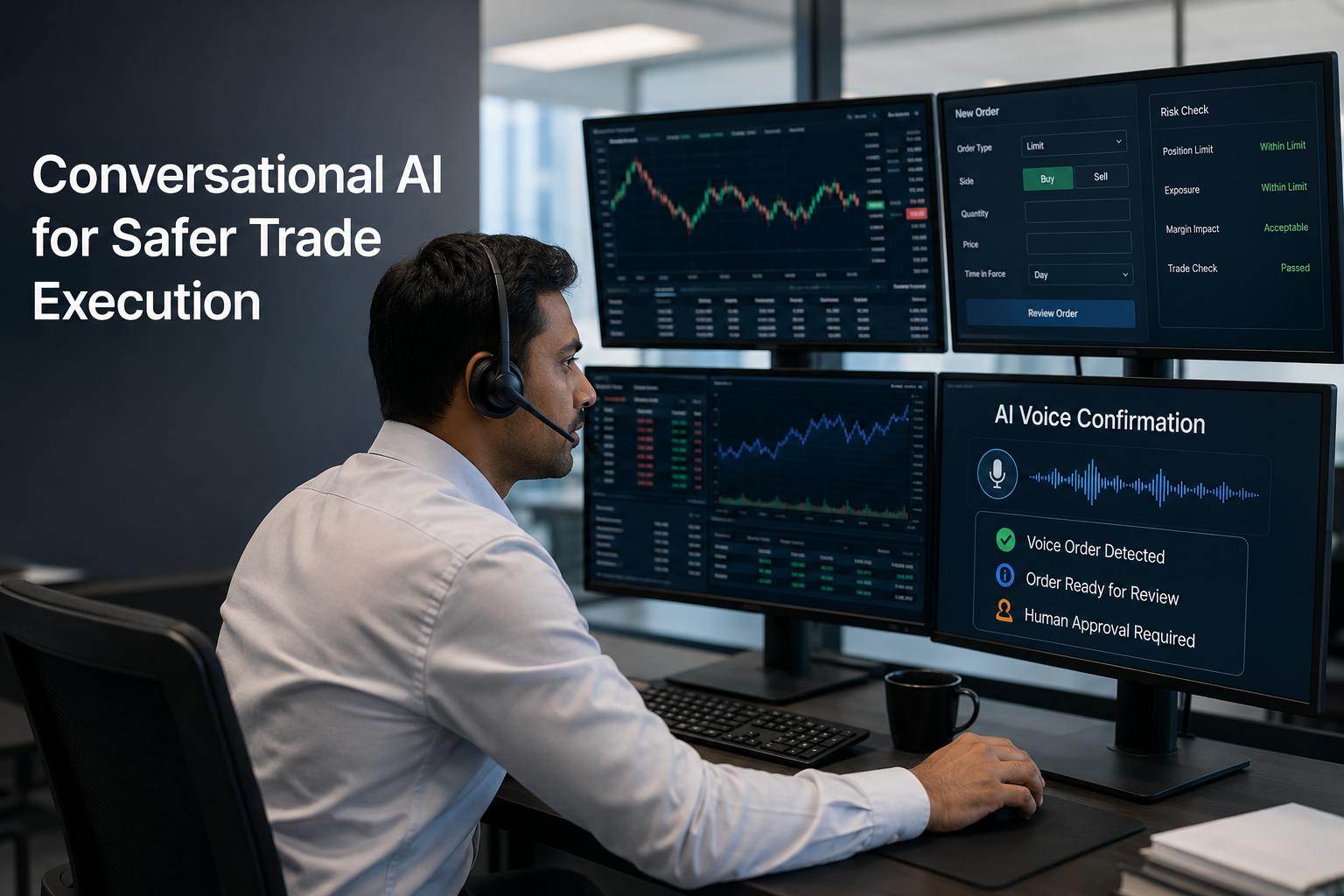
The Safety Check: Instead of executing the trade directly, the platform triggers a visual validation prompt on the broker’s screen. The software translates the command into a clear summary, such as: “Confirming: Buy 500 shares of the selected equity at market price. Please review before submission.”
Human Verification: The broker reviews the pre-filled order modal and confirms the final transmission manually.
By building this layered flow, the system helps reduce input errors and supports more controlled execution. If the voice engine encounters low-confidence audio, unclear wording, or an accent-related issue, it should not guess. It should alert the operator to manually verify the fields. This ensures that the tool works as a protective support layer rather than an uncontrolled automation risk.
Anatomy of an Error-Free Transaction: Before vs. After Scenarios
To understand the practical difference, let’s compare how a trade can move through an active brokerage desk with and without conversational AI support.
The Legacy Manual Path, High Risk
A high-net-worth client calls a busy broker in Delhi during a sudden market movement and gives instructions for a complex trade across multiple instruments. The broker listens to the instruction, checks the client’s available margin, switches between different screen layouts, and manually enters the instrument details, quantity, order type, and limit price into the execution interface.
Under pressure, the broker may enter an extra zero in the quantity column or select the wrong expiry from a dense dropdown menu. The order may be submitted before the mistake is noticed. By the time the error is detected in the post-trade process, the market may have already moved, leading to reversal efforts, financial slippage, reconciliation work, and a possible compliance review.
The Conversational AI Path, De-Risked
Under the same high-pressure scenario, the broker listens to the client and speaks the order naturally into the system. The conversational engine captures the verbal instruction, identifies the key fields, and populates the order ticket on the broker’s screen.
At the same time, the software checks margin rules, unusual quantity patterns, and possible ambiguity in the selected instrument. If the system detects a mismatch or low-confidence input, it shows a validation prompt, such as: “Instrument ambiguity detected. Please confirm the correct asset type before submission.”
The broker reviews the prompt, selects the correct option, verifies the pre-filled fields, and submits the order manually. This process can reduce typing effort, improve order preparation speed, and lower the chance of a fat-finger error reaching the execution stage.
Compliance Frameworks: Navigating the SEBI Call Recording Mandate
For full-service and discount stockbrokers operating in India, risk mitigation must align with regulatory expectations. Voice-driven trading systems must be planned carefully because client instructions, call records, and order confirmations may be reviewed during audits or disputes.
This is especially important under SEBI’s call recording requirements, where brokers are expected to maintain proper evidence for client order instructions received through telephone or other communication channels. In the case of an unauthorized trade dispute, the broker may need to show clear records of what was instructed, when it was received, and how it was processed.
The Regulatory Imperative: Custom conversational AI can help transform compliance from raw audio storage into a more structured and searchable transaction record.
Instead of compliance teams manually searching through large volumes of unindexed call recordings, a well-designed conversational AI system can compile the transaction lifecycle into a single reviewable data package. This may include the original voice recording, AI-generated transcript, validation confirmation shown to the dealer, final human approval timestamp, and system confidence score.
Enterprise-grade development can also support user authentication, role-based access, secure logging, and controlled data storage. These protocols allow organizations to expand digital trading ecosystems more safely while creating a foundation for future advanced AI wealth applications and automated compliance tracking systems.
However, AI transcripts should not be treated as the only source of proof. Brokerage firms should design these systems with legal, compliance, cybersecurity, and operational review from the start.
Conclusion
Implementing conversational AI within institutional brokerages is not about handing execution control to autonomous bots. True operational improvement depends on a disciplined human-in-the-loop design, where natural-language algorithms handle data entry support, structure parsing, and risk pre-checking, while licensed professionals retain final execution control.
For WealthTech platforms, discount stockbroking apps, and institutional desks aiming to reduce operational risk in the growing Delhi market, intelligent validation layers can become a strong competitive advantage. By reducing manual keyboard bottlenecks, lowering the chance of typing mistakes, and improving compliance records, custom voice tools can make daily trading operations more controlled and efficient.
Partnering with an experienced engineering team like Theta Technolabs allows firms to build tailored financial communication tools that support client trust, improve platform reliability, and strengthen regulated trading workflows.
Ready to de-risk your brokerage operations? Connect with our fintech engineers at sales@thetatechnolabs.com to discuss a custom voice-validation solution built for your trading terminal architecture.
Frequently Asked Questions
Q1: If the conversational AI misinterprets a spoken order and a trade error occurs, who carries the financial liability?
Because a custom conversational platform follows a human-supervised architecture, the AI should not execute orders autonomously. The software interprets the voice command and pre-fills a structured order ticket on screen. The final submission still requires visual review and physical confirmation by the licensed human operator. This keeps execution authority with the human broker while allowing the system to support productivity and error reduction.
Q2: How does a voice-to-action system maintain high data precision over loud background noise on an active trading desk?
Enterprise-grade conversational systems can use tuned voice capture, noise handling, financial vocabulary training, and strict confidence thresholds. If the audio quality is poor or the system is unsure about the instruction, it should stop and move the ticket back to manual verification instead of guessing the transactional parameters.
Q3: Can a conversational AI system integrate directly with our existing legacy Order Management System?
Yes. Specialized conversational AI development does not require firms to replace their entire core trading infrastructure. The platform can be built as a secure middleware application that translates parsed natural-language inputs into structured order fields and connects with the existing OMS or EMS through secure APIs, standard financial messaging protocols, or custom integration methods.