.png)


Every year, Ganesh Utsav turns Indian cities into a sea of people. Pandals overflow with devotees, processions wind through narrow lanes, and visarjan day sends lakhs toward rivers, lakes, and artificial ponds within a few packed hours. It's one of the most joyous festivals on the calendar and one of the hardest to manage safely at scale.
Crowd safety at this scale cannot rely on manual policing alone anymore. Authorities across the country are increasingly turning to technology that can spot trouble before it starts, rather than reacting once a situation has already turned dangerous. This shift is exactly what AI crowd management is built for.
This blog looks at how AI crowd management actually works, where it fits into a Ganesh Utsav event, and what organizers and authorities should know before adopting it.
Why Traditional Crowd Control Struggles During Ganesh Utsav
Volunteers, barricades, and police deployment have handled Ganesh Utsav crowds for decades, and they still matter. But manual coordination has a ceiling. A handful of personnel watching a stretch of road cannot track density building up three lanes away, and radio based updates are only as fast as the person relaying them.
The failure points are well documented. Poorly maintained walkways, insufficient ventilation in packed pandal areas, and unclear signage all make it harder for people to move safely when crowds swell, and when panic does set in, even a false alarm can trigger a chain reaction, according to Forbes India. These are exactly the conditions Ganesh Utsav creates at scale, especially around visarjan points where thousands converge on a single access route at the same time.
What AI Crowd Management Actually Does
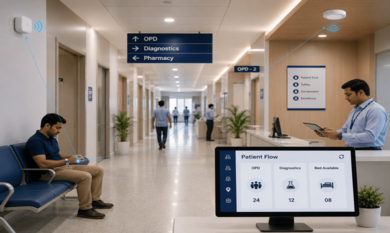
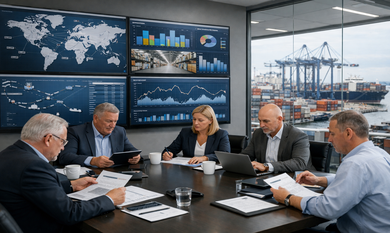
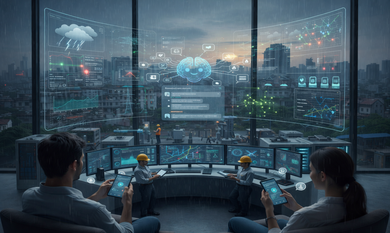
At its core, an AI crowd monitoring system uses computer vision to read live video feeds, from existing CCTV networks or purpose installed cameras, and interpret what is happening in the crowd itself, not just record it. Instead of a person watching a dozen screens, the system tracks how densely people are packed into a space and how that is changing second to second.
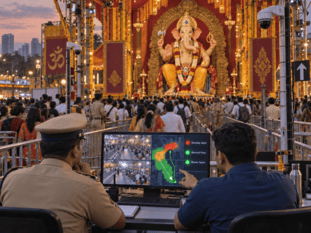
This is where real-time crowd density analysis becomes useful. The system classifies an area's crowd state, for example normal, moderate, dense, or risky, and flags it the moment it crosses a safe threshold, well before a human observer would notice from a control room. This kind of monitoring is especially valuable at points where crowd flow narrows suddenly, such as pandal entrances or immersion ghats, where a small delay in noticing a buildup can matter a great deal.
It’s important to note that crowd safety systems focus on spatial movement, density patterns, and continuous flow rather than individual facial recognition. The video analysis processes anonymous crowd dynamics in real time without storing personally identifiable information, keeping the deployment fully compliant with data privacy standards.
Beyond density, these systems also catch behavior anomalies, a sudden surge, a stalled bottleneck, or unusual movement patterns, that often precede a stampede, giving organizers minutes of warning instead of none.
Where It Applies Specifically to Ganesh Utsav Gatherings
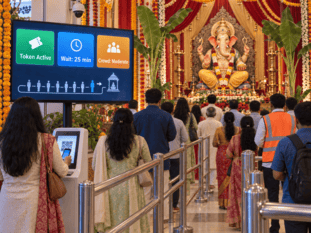
Pandal entry and exit points. Queue length and density can be tracked live, letting volunteers redirect devotees to less crowded entrances before a line becomes a crush.
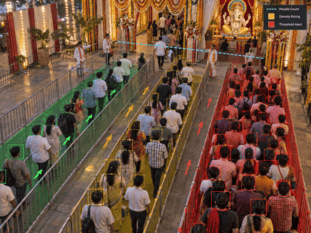
Procession routes. Narrow lanes are where surges happen fastest. Cameras along the route can flag density buildup early enough for police to slow the procession or open an alternate path.
Visarjan and immersion points. This is the highest risk zone of the entire festival. Ganpati visarjan crowd control benefits directly from AI monitoring at ghats, artificial ponds, and riverbanks, where thousands arrive within a tight window and exits are often limited.
Lost person support. Camera networks already covering the crowd can also help reunite separated children or elderly devotees with their families faster than manual search.
Aerial gaps. Fixed cameras cannot see everything. Stage structures, tents, and crowd volume itself create blind spots. Drone-based smart crowd surveillance fills these gaps, operating in strict coordination with local police permits and civil aviation guidelines to safely monitor dense public spaces.
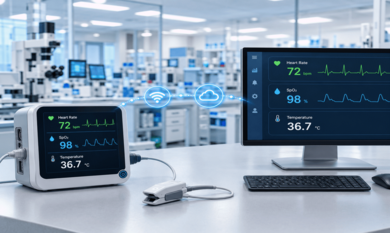
Many of these deployments also lean on connected sensors and smart barricades that report status back to the same control dashboard, the kind of setup a capable IoT development company in Ahmedabad would typically design and integrate alongside the AI layer, so density alerts and physical crowd control equipment respond to the same real-time data.
A Simple Example of How This Works in Practice
Picture a large pandal on the fifth day of Ganesh Utsav, typically one of the busiest days as devotees turn out in big numbers over the weekend. By early evening, the queue outside the main entrance starts growing faster than usual, more people are arriving than the entrance can comfortably process, and the barricaded walkway starts to feel tighter than normal.
In a manual setup, this buildup is usually noticed only when it becomes visible to someone standing nearby, often after the queue has already spilled out onto the main road.
With an AI crowd monitoring system in place, the cameras covering that entrance pick up the density increase within seconds. The dashboard flags the zone as moving from "normal" to "dense," and the control team gets an alert well before the situation becomes risky. Based on that alert, volunteers can act early, opening a second entry lane, pausing entry for a few minutes to let the pandal clear out, or redirecting some devotees to a less crowded side gate.
That is the practical difference this technology makes. It is not about replacing the people managing the ground, it is about giving them the extra few minutes of warning needed to act before a crowded entrance turns into an unsafe one.
The Technology Behind These Systems
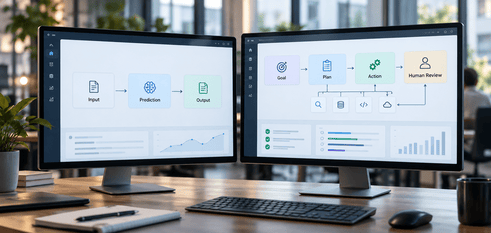
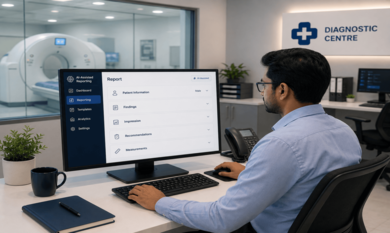
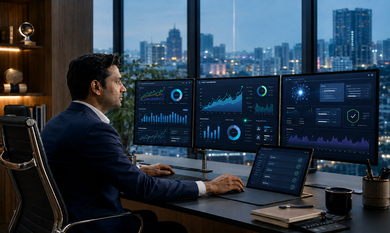
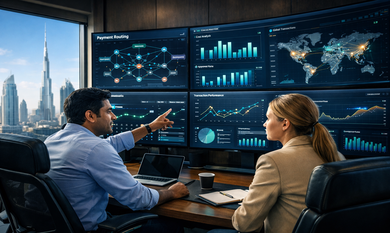
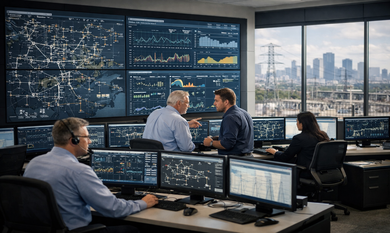
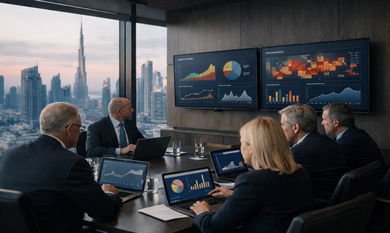
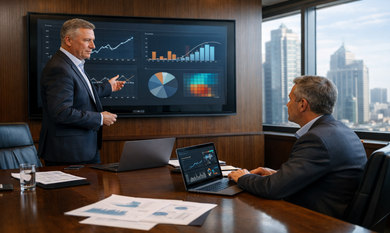
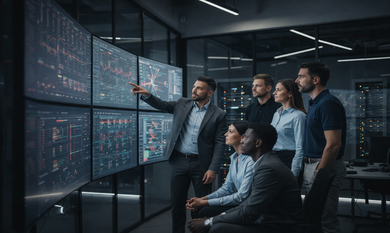
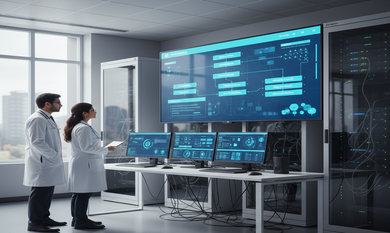
Underneath the dashboard, these systems rely on a few core components working together. Computer vision models process video feeds to estimate crowd density and detect movement patterns, often using deep learning architectures trained specifically to distinguish normal foot traffic from risky compression. Edge computing keeps this processing close to the cameras themselves, cutting the delay between something going wrong and someone being alerted. And a central dashboard ties everything together, giving police and mandal coordinators one shared view instead of dozens of disconnected camera feeds.
Building this reliably takes real domain expertise. This is precisely the kind of work handled by an experienced computer vision development services Ahmedabad team, from model training on crowd specific datasets to integrating live alerts into a control room ready interface.
Benefits for Organizers and Authorities
The payoff is not just fewer close calls on the day itself. Organizers get faster incident response because alerts arrive before density becomes dangerous, not after. They also walk away with real footfall data, peak times, congestion points, entry patterns, that makes next year's planning evidence based instead of guesswork. And for the public, visibly better managed crowds build trust in both the event and the authorities running it, which matters for a festival with this much cultural weight behind it.
Conclusion
Ganesh Utsav will keep growing every year, and so will the crowds it brings onto the streets. Relying only on manual coordination worked for a long time, but it was never designed for gatherings of this scale. AI crowd management fills that gap, not by replacing the people on the ground, but by giving them earlier and more accurate information to act on.
From pandal entrances to procession routes to the highest-risk visarjan points, the same underlying system, cameras feeding computer vision models that flag density before it turns dangerous, applies across every stage of the festival. For organizers, municipal bodies, and police departments planning ahead, this is no longer emerging technology. It is already being used at scale in India, and it is well within reach for events of any size.
Getting Started with an AI Development Partner
Building a system like this takes a technology partner who understands both the AI and the on ground realities of a festival deployment, where cameras need to go, how alerts should route to the right people, and how to keep the system running reliably across a multi day event.
If you are an organizer, municipal body, or event tech decision maker exploring this for an upcoming Ganesh Utsav, working with a team like Theta Technolabs, an established AI development company in Ahmedabad, means you get the computer vision, IoT integration, and dashboard build handled as one connected system rather than disjointed pieces. Beyond the AI layer itself, the same team can also build out the web dashboards, mobile apps for on ground personnel, and cloud infrastructure needed to run the whole system reliably at scale. Reach out at sales@thetatechnolabs.com to talk through what a deployment would look like for your event.
Frequently Asked Questions
Is AI crowd management only useful for mega events like Kumbh Mela?
No. While the largest deployments make headlines, the same underlying technology scales down effectively for a single large pandal or a city level Ganesh Utsav procession. The camera count and infrastructure simply scale with the event size.
How does AI actually prevent stampedes at visarjan points specifically?
By flagging density buildup and unusual crowd movement in real time, giving organizers a window to redirect flow, open alternate access, or slow a procession before density reaches a dangerous point, rather than reacting only after a crush has already started.
Is this affordable for local mandal committees, or only for large government scale deployments?
Costs scale with the deployment's size and complexity. A single procession route or immersion point can be monitored with a modest camera setup, making it viable well below the scale of a citywide police deployment.
Does AI crowd management replace volunteers and police on the ground?
No, it supports them. The technology gives human teams earlier, more accurate information so they can act faster. The actual crowd guidance, communication, and emergency response still depends on trained people on site.