A production plan may show enough factory capacity for the festive season while the purchasing team is still short of a small but essential component. The main material could be available, yet packaging, connectors, fasteners or an approved chemical may not arrive in time. The problem is usually not a lack of demand forecasts alone. It is the gap between expected finished-goods orders and the materials required to produce them.
Raw material shortage prediction helps Indian manufacturers identify that gap before a production order reaches the line. By connecting demand forecasts, bills of materials, usable stock and supplier lead times, software can highlight the parts most likely to delay manufacturing. This guide focuses on planning decisions and data requirements rather than promising that AI can eliminate supply disruption.
Translate sales demand into component demand
A retailer's purchase forecast and a manufacturer's material requirement are not interchangeable. Demand for a finished product must be converted through its approved bill of materials. A single product may use different component quantities depending on the model, size, packaging format or customer specification.
The planning process should begin with confirmed orders and a separate forecast for likely additional demand. These categories must remain visible. Adding the full sales forecast to confirmed purchase orders without adjusting for overlap can inflate requirements and trigger unnecessary buying.
Next, account for work already completed, partially assembled goods and components committed to other jobs. Material requirements planning calculates what remains needed after these adjustments. It must also respect effective dates for design changes; an old component may no longer be suitable for a newly released product.
Microsoft's master planning guidance explains how available materials and capacities are balanced against future requirements. The practical lesson is to calculate the need, not simply compare the forecast with a warehouse total.
Check what stock can actually be consumed
Inventory reports commonly include categories that production cannot use immediately. A component might be under incoming inspection, blocked for quality reasons, reserved for a different contract or located at another plant. Available-to-promise inventory and material available for production are related but not identical quantities.
The shortage engine should consider the status and location of each lot or batch. It should also recognize production scrap allowances, expiry constraints and minimum usable quantities where relevant. A packaging material with the wrong print version cannot satisfy the requirement just because its item description looks similar.
Integrating manufacturing software development with ERP and warehouse transactions allows planners to work from consistent stock definitions. If a quantity is corrected on the shop floor, the planning view needs to reflect it through an approved update rather than waiting for another weekly spreadsheet.
Cycle counts and stock adjustments should remain traceable. Forecasting software cannot compensate for a warehouse record that repeatedly differs from physical inventory. Begin by fixing item master data, unit conversions and reservation logic. Define a common unit of measurement for each material, then ensure purchase orders, receipts and production consumption use approved conversions. Otherwise, a dashboard may report apparent shortages or surplus stock that are only data-entry differences.
Model supplier lead time as a source of uncertainty
A supplier's standard quoted lead time is a starting point, not a guaranteed arrival date. Order acceptance, factory loading, transportation, quality checks and public-holiday schedules may affect the actual receipt. Supplier lead time forecasting can compare historical promised and actual dates, while procurement staff provide information about known disruptions.
For each critical material, record the latest reliable order date, expected receipt date, minimum order quantity and whether expedited replenishment is commercially possible. Track supplier confirmation separately from a purchase request. A request that has not been accepted should not appear as a guaranteed incoming supply.
An application can classify materials by shortage risk using expected demand, remaining stock, scheduled receipts and lead-time uncertainty. But not all suppliers provide enough historical data for a statistical prediction. In such cases, a conservative planning rule and regular buyer review can be more dependable than a complex model.
Festive production also interacts with supplier closures and transportation availability. The system should use actual confirmed calendars rather than assuming every supplier follows the same Diwali operating schedule.
Use more than a single shortage threshold
An alert saying “stock below minimum” does not tell planners whether production is at risk. The same quantity might cover a week of normal operations but only a short period of peak demand. A useful inventory shortage alert should identify the material, affected orders, expected shortage date and earliest credible replenishment.
Consider a scenario where a factory has sufficient material for confirmed work but not for the additional demand forecast. The dashboard should distinguish a committed-order shortage from a forecast-only risk. That separation lets procurement prioritize expenditure appropriately.
Safety stock planning may provide a buffer against demand and lead-time variation. However, a fixed buffer for every item can tie up cash and warehouse space. Planners should evaluate material criticality, consumption stability, supplier reliability and replacement options before setting policy.
For businesses working with machine learning services in Ahmedabad, model outputs should explain which assumptions drive the warning. If the risk changes because demand increased, show that change. If it changes because a supplier date slipped, show the supplier event. An unexplained risk score is difficult to use in procurement.
Decide which shortage deserves attention first
Purchasing teams often face several simultaneous alerts. Sorting solely by quantity short can be misleading. One missing low-cost component may block an entire order, while a larger shortage in nonessential packaging might have an approved alternative.
A practical priority framework should consider production impact, due date, customer commitment, qualified substitute availability and replenishment options. Production material planning should identify the next operation that cannot proceed, not only the final assembly date. That gives teams time to make a decision before the shortage reaches the line.
Possible responses include advancing a purchase order, transferring unallocated stock between plants, resequencing production, using an approved alternate supplier or revising customer delivery dates. None should happen automatically if it changes quality specifications, commercial terms or contractual commitments.
Substitutions require particular caution. Procurement cannot simply exchange a critical component because another part has a similar description. Engineering, quality and the customer may need to approve the alternative under the company's change-control process.
Connect procurement, production and warehouse workflows
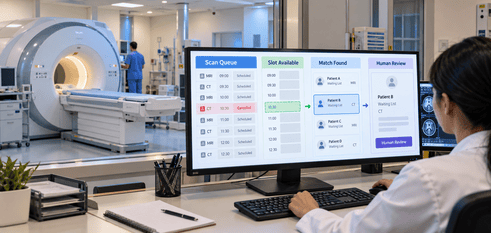
The shortage forecast becomes useful when it drives a clear workflow. The buyer should see outstanding supplier confirmations. The planner should see which operations are affected. Warehouse staff should see whether stock has arrived, been inspected and released. Management should see unresolved risks and the person responsible.
Supplier tracking software can attach purchase-order revisions, promised dates and receipt evidence to a material risk case. The dashboard should preserve the original promise and the updated one. Overwriting the old date makes it difficult to understand why a plan changed.
Integration with IoT development services may be useful where factories already capture machine usage, process counts or production consumption automatically. Sensors do not predict shortages by themselves, but actual consumption data can improve the material plan when the readings are reliable.
For sites with intermittent connectivity, permit controlled local data capture and clear synchronization status. A late scan should not silently rewrite an approved historical inventory balance. Exception review and traceability are necessary for reliable planning.
Test the model against decisions people made
Before changing purchasing behaviour, compare historical predicted shortages with real outcomes. Did the system identify the material early enough to respond? Were warnings caused by incorrect inventory, demand bias or supplier timing? How often were alerts dismissed for valid reasons?
Demand forecasting for manufacturing should be assessed by product family and planning period. A model that performs well on steady products may struggle with festival-specific items or newly introduced models. Keep a human override for known events that are absent from historical data.
A staged pilot is better than a company-wide launch. Begin with critical materials in one production family, agree on data ownership and refine alert thresholds with buyers and production supervisors. Expand when the team can explain the warnings and measure their usefulness.
Frequently asked questions
Can AI predict the exact date a supplier will deliver material?
It may estimate a likely receipt window from available evidence, but supplier confirmations and real logistics events are still needed. Exact delivery cannot be guaranteed.
Does a manufacturer need an ERP before using shortage forecasting?
Not necessarily, but it needs dependable records for orders, bills of materials, inventory and purchases. Integrating with an existing ERP often reduces duplicated entry.
What is the difference between demand forecasting and material planning?
Demand forecasting estimates what customers may need. Material planning converts requirements into components, then checks stock, work in progress and expected receipts.
Should manufacturers increase safety stock before every Diwali?
Not automatically. Buffer levels should reflect material criticality, demand variation, lead times and cash constraints rather than a blanket seasonal rule.
Plan Manufacturing Operations with Greater Accuracy
Predicting shortages requires a dependable connection between finished-goods demand, material consumption, supplier commitments and actual warehouse status. Theta Technolabs develops custom AI-powered demand forecasting and inventory management solutions using machine learning, Python and secure API integrations to help Indian manufacturers monitor raw material availability, identify potential supply shortages and improve production planning during festive demand. To discuss your manufacturing software requirements, contact us at sales@thetatechnolabs.com.